
Working with a multi-unit franchise expert is what will set you up for financial success. However, that’s only assuming you’re working with the right person.
Entering the world of franchising can be a thrilling experience, or it can be a daunting nightmare. When it comes to multi-units, the quality of the expert you’re working with needs to be substantially higher.
For that reason, it’s important to ask grilling questions (sorry about the pun!) when you’re talking to various multi-unit franchise experts as the person will be your guiding light as you approach this new adventure.
Multi-unit franchising is an entirely different game because the stakes are much higher. Simply Google “multi-unit franchise expert” will not necessarily yield the most accurate result, or at least give you the person who is right for you.
Not afraid to tell you no
Any consultant, whether engaged in franchising or not, should work with you in order to find solutions with the party they’re working with that suits that person. A good consultant tends to be a good listener.
However, there’s an aspect to consulting that’s important, particularly when this much money is changing hands. As much as the consultant needs to work within the boundaries of what you’re looking for, I also find it important that said person needs to be willing to tell you when he doesn’t think something’s right for you.
It’s potentially a bit harsh to word it as “Not afraid to tell you no,” whereas it may be more accurate to say the expert needs to look out for your interests in all situations.
I personally pride myself on the aspiring franchisees that I work with that do not end up getting into multi-unit franchising?
Why?
There are situations where it’s just not right for them. If that’s the case, it’s better to pull the plug than proceed in the wrong direction. Multi-unit franchising is often a commitment of several million dollars, and you’ll want to make sure you get it right the first time around for that reason.
A different degree of technical knowledge
One thing is being able to look at a theoretical spreadsheet and suggest theoretical solutions, another is having had operational experience.
As a person who has operated actual businesses with 90 inbound leads coming in per day, you realize the need for processes at a much higher level than when you’re operating at a smaller scale. The person you have in your corner when you’re choosing your next business needs to have gone through the experience you will in order to best be able to consult you.
A good multi-unit franchise expert needs to think at both a higher and lower level. What do I mean by that?
When it comes to considerable territory development, you’ll need to ask a lot more questions. Does the business rely heavily on foot traffic, and if so, are you able to secure the necessary locations for that.
What does the ideal customer profile look like versus the local population of the area you’ll be developing in?
What’s your plan for expansion? Are you building in clusters?
What do you need to look for in the protected territory terms in the FDD? These terms may not just leave you vulnerable to other franchises impeding on your area, but they can also impact future growth.
Have you looked at similar companies/franchises in the area, and does it feel like there’s room for you to enteer and be successful?
Operational Systemization
Whenever it’s just you in a business, it’s easy to run. However, you alone can’t do the work of 50 people, and that’s something that’s important to look for in the multi-unit franchise expert you’re teaming up with.
Have they personally run a business that scaled, and were they successful? Have they ever sold a business with many moving parts?
Why would you rely on a person who has never built what it is you’re trying to build?
Know the red flags to look for in the FDD
| 🚩 Red Flag | ⚠️ What It Means |
|---|---|
| Vague development schedule | If the Franchise Disclosure Document (FDD) doesn’t clearly define unit rollout timelines or includes ambiguous language (“to be determined” or “reasonable efforts”), it can lead to missed territory control and penalties later. |
| Cross-default clauses across units | If one underperforming store triggers a default across all locations, your entire investment is at risk. Look for addenda that allow per-unit remediation and isolate defaults. |
| Overreliance on national marketing fund | When the franchisor focuses only on brand-level campaigns, local franchisees often end up under-supported. In multi-unit deals, you need co-op leverage or LSM freedom built into your agreement. |
| Unrealistic item 19 earnings claims | If the earnings claims (Item 19) show high AUVs but don’t separate corporate vs franchisee-owned locations—or don’t show unit counts used in the calculation—it’s likely inflated or cherry-picked. |
| Unclear succession or resale rights | If your development deal locks you in but doesn’t define how you can divest or assign individual stores, you may be forced to sell all units or none—losing flexibility in exit strategy or capital recycling. |
| 🚀 Get Guidance | Talk to Thomas about multi-unit franchise red flags ➜ |
Multi-unit franchising is a different ball game than owning a singular unit, and there are some red flags to be aware of in the FDD.
The right expert will be able to help you spot those so you’re not committing life-altering mistake. Let’s take a look at some of the potential issues.
Not being able to have multiple units in the first place
This one’s pretty obvious, but some companies don’t let franchisees own several units. For instance, it’s the casae with Chick-fil-A. (However, you don’t even technically own a Chick-fil-A if you work with them).
Discounts for multi-units
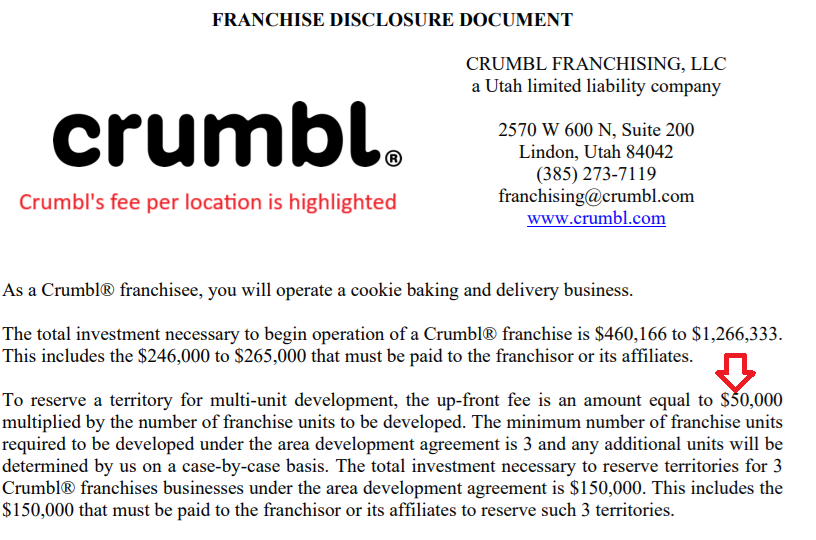
While not technically a red flag, some companies may offer you discounts if you sign several units with them. You’ll just need to know what you’re committing to and be OK with it. Item 5 of the FDD is where to look for something like this.
Ongoing fees that aren’t justified
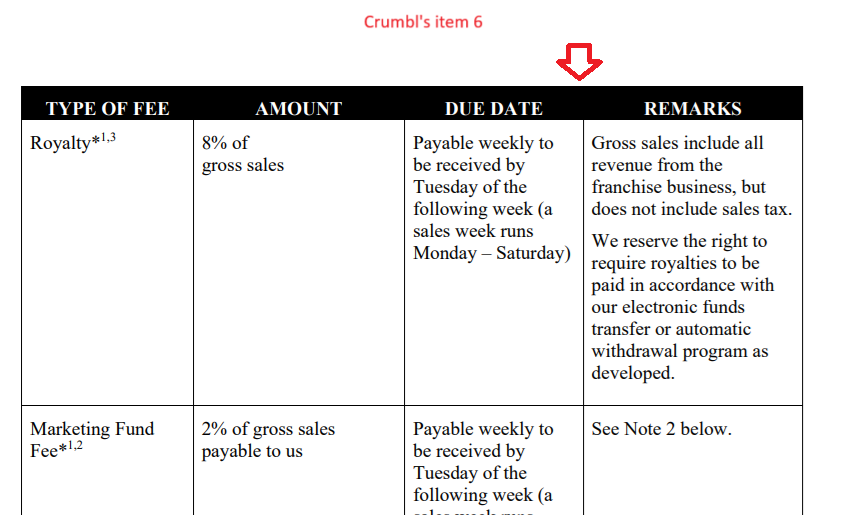
When you’re opening a franchise, you want to know the fees. It doesn’t matter if it’s a Crumbl Cookies or an Anytime Fitness. However, when you’re opening several locations at once, you’ll need to comb through the fees to understand them. If you have fees that scale with several units, you want that to only happen when the business is successful. Look in item 6 of a company’s FDD to find this.
Item 17, in general
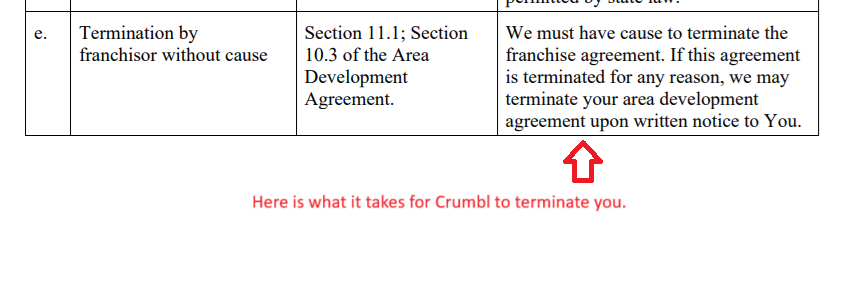
Item 17 is my biggest pet peeve that most potential franchisees miss. Essentially, you’re looking at the rights when it comes to renewing, termination, transfer, or other important legal considerations.
Some companies are more aggressive in their verbiage when it comes to WHY they can terminate your agreement. You want the reason to be good if they’re able to terminate your agreement, but you also want to make sure you can live with the restrictions on transferring units.
These are definitely not all the red flags, but very important considerations in your multi-unit franchising considerations. Again, if you’re in doubt or want a second opinion, make sure to reach out.
The value of the right expert
Opening multiple locations of any business is hard enough as is. With multiple-location franchising you’re not just adding staff or signing leases. You’re building a machine that can operate even if you’re on vacation. The business shouldn’t run you into the ground, and the right franchising expert can help you get there. So, if you’re ever in question, don’t hesitate to reach out!
Leave a Reply