
Did you ever consider opening your own gym, perhaps as part of a franchise? Or would you rather own a truck and operate your business out of there.
The reality is there are many ways of being in business. In this article, we’ll look at franchise failure rates for Anytime Fitness. While Anytime Fitness franchise’s failure rate sits around 10%, it’s not the only thing you should be considering. The reality is there are franchisees associated with the franchisor, and some of them aren’t happy. I’ll delve deeper into this later on in the article.
Franchise failure rates is one aspect of evaluating the viability of a business, including Anytime Fitness.
As part of evaluating any franchise opportunity, you’ll be looking at things like the FDD (franchise disclosure document) and the Item 19.
In addition, you’ll need to figure out whether certain aspects of a business are even ones you’re willing to live with. Do you want to spend your Saturdays in a truck? Are you keen on running an establishment with a lingering smell of sweat?
Not all types of businesses work for all sorts of people, so while the financials need to make sense, as do the personal aspects of a business.
In your search to find the right franchise, you’ll probably look through hundreds of different opportunities. Most of them will absolutely not match what you’re looking for.
Here’s part two of where we look at franchise failure rates, and particularly that of Anytime Fitness. Make sure to also check out part 4.
Anytime Fitness Franchise Failure Rate
Anytime Fitness has a franchise failure rate of 10%, which is considerably better than the gym industry average ranging between 10-20% per year. However, that doesn’t necessarily mean it’s right for you.
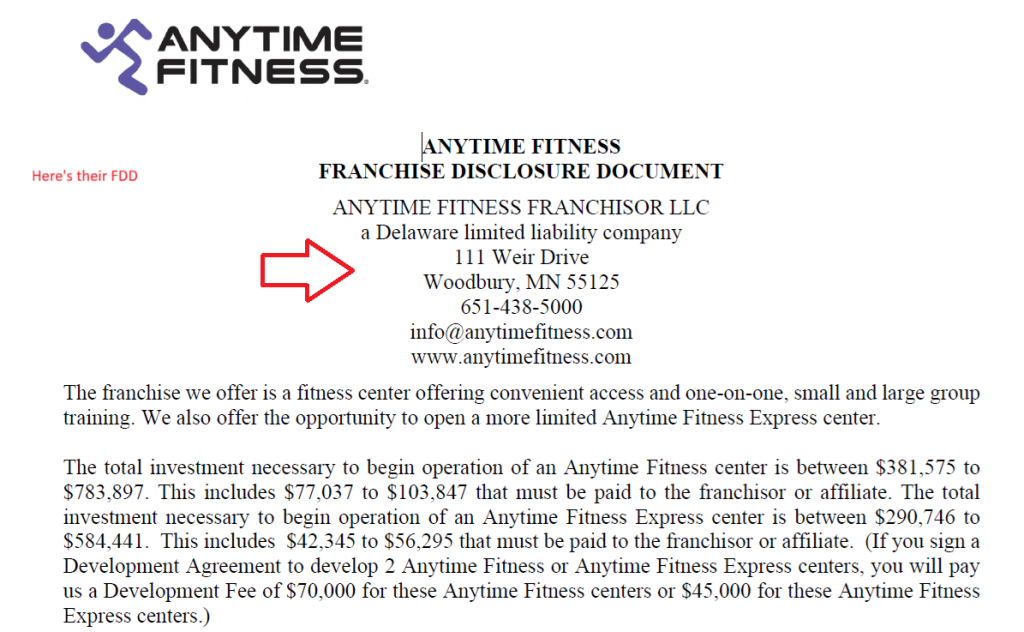
The good news is that when you buy into a fitness franchise, you’ll often see that they don’t tend to go out of business. This trend is much different from individual fitness locations that are extremely difficult to run profitably.
Fitness businesses often come with the excruciating fact that they have razor thin margins. While it’s true that a lot of people struggle with extra weight when January comes around, it’s also true that not everyone is willing to pay top dollar to go to a fancy location.
What I like about a business like owning an Anytime Fitness is that there haven’t been any major scandals the company has gone through, which tends to say a lot about the management.
While gym closures were definitely on the rise during the pandemic, that is no longer the choice, and it’s once in again to go and be healthy. With that said, there are many things I don’t like about this as a business. From the numbers I could find, an Anytime Fitness club brings in an average of $389,000 in annual revenue, while the profit is a measly $58,000.
If you’re already putting a lot of money into a risky business, I do like to recommend businesses to clients where I feel the straightforwardness to a bigger profit number is bigger.
What’s more is that profitability also comes down to other factors that could be hard to control. You have significant overhead, and the area you’re looking at may already be saturated as far as gyms go.
Is this the right opportunity for you?
| 🏋️ Key Factor | 📋 Gym Franchise Insight |
|---|---|
| Initial franchise fee | Typical gym franchises charge $20,000–$40,000 per unit. Some brands offer discounts for multi-unit operators or veterans. |
| Total investment range | Common ranges fall between $150,000 and $600,000 depending on location size, buildout scope, equipment quality, and territory type (urban vs suburban). |
| Royalty & marketing fees | Most gym brands charge 5%–7% royalties and 1%–2% for national marketing. Local marketing spend is often required and varies based on market saturation. |
| Real estate & footprint | Gyms typically require 3,000–6,000 sq ft with high visibility and parking access. Some newer models favor 1,500–2,500 sq ft express formats, especially in urban zones. |
| Staffing model | Smaller gym models (e.g. 24/7 access) often require 1–2 full-time employees and supplement with part-time trainers. Larger models may require front desk, trainers, sales roles, and cleaning staff. |
| Common franchise challenges |
• Oversaturation in urban markets • Heavy discounting by competitors (race to the bottom pricing) • Retention issues if members don’t engage within the first month • High equipment financing costs or lease obligations during downturns |
| 🚀 Franchise Support | Talk to Thomas about gym franchise strategy ➜ |
When I work with aspiring franchisees, we thoroughly go over a range of options. Choosing a gym franchise is right for some, whereas it may not be for others.
I’m personally pretty hesitant in recommending gym franchises to aspiring franchisees because there are certain aspects of the business I wouldn’t enjoy myself. In addition, I’ve found some stories online that outline why franchisees aren’t happy with the franchisor.
The gym space is pretty competitive in certain areas, and sometimes it just isn’t worth it.
I know for myself that one of the things I look for in a gym I consider going to is a mixture of the facilities and the price I am willing to pay for it. I personally find that owning and offering a gym experience is hard to set yourself apart.
You’ll either need to go very high end, at which point you’re limiting the market segment considerably. On the other hand, you can go cheap, but then you need an enormous amount of members before you break even, let alone before you start making money.
Remember, in order to open a gym, you’ll need to rent a large footprint which comes with steep monthly dues. When I work with aspiring gym owners that are set on opening a gym rather than a different business, I make sure we evaluate all the different options rather than just committing to the first one that pops up.
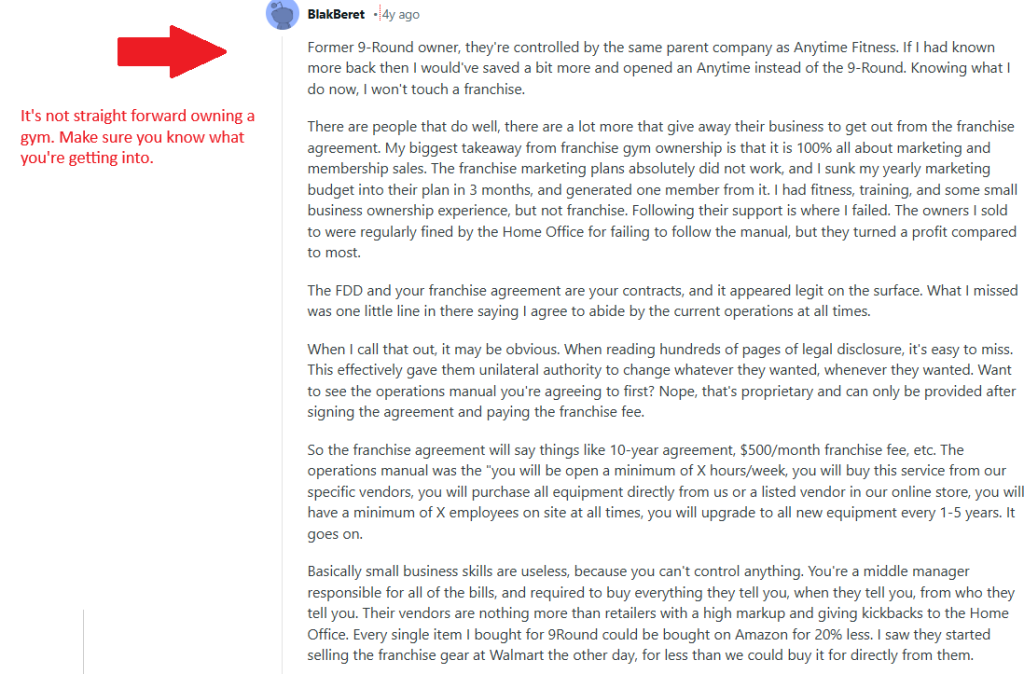
One issue I’ve repeatedly found when analyzing the FDDs of gyms is that you’re agreeing to operational things you don’t necessarily know the repercussions of. As is also reported on Reddit, many of the franchisors require that you replace equipment with certain intervals. This can get expensive very quickly. Here’s the recollection of someone who used to own a 9-Round. Make of that what you will.
If you’re an aspiring franchisee, make sure to schedule a call and we can evaluate your options.
Leave a Reply